
On February 28, 2026, United States and Israeli military forces struck targets around Iran with a combination of missile strikes, attack drones, and fighter jets. Reportedly, Iranian Supreme Leader Ayatollah Ali Khamenei was killed in the strikes. Iran launched retaliatory strikes shortly afterwards, and it remains unclear for how long the ensuing conflict will last.
The motivations for the attacks were multifaceted. The United States, especially during President Trump’s current administration, has been vocal about the threat posed by the possibility of Iran acquiring nuclear arms and other military technology to threaten the US. Iran suspended its original nuclear weapons program in 2003. However, after the 12-Day War between Iran and Israel in June of 2025, where the United States conducted a series of strikes against Iranian nuclear facilities, Khamenei reportedly authorized the development of compact warheads to use in ballistic missiles, but not the enrichment of uranium to a level needed to build long-range nuclear arms. According to the Defense Intelligence Agency, Iran could develop an Intercontinental Ballistic Missile with which to threaten Europe and the US by 2035. While the military threat Iran poses to US soil is not immediate, it likely will have the capabilities to become a danger in the future. Currently, though, Iran does not appear to possess combat-viable nuclear arms, much less long-range nuclear missiles.
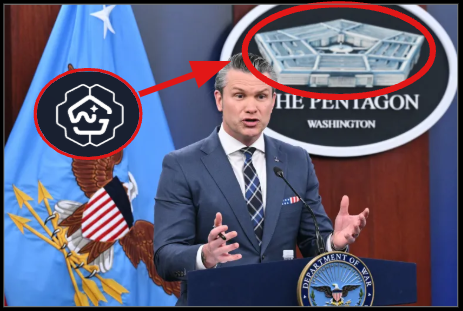
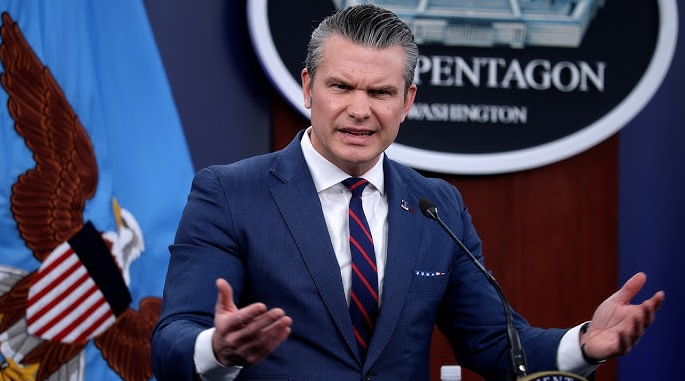
Although the main justification for the strikes was the idea that Iran could acquire more powerful weapons in the future, US and Israeli officials also claimed that the attack was preemptive, that is, that Iran was planning an imminent attack on Israel and/or US military installations in the Middle East. In his announcement of the war, Trump claimed that the attack’s objective was “eliminating imminent threats from the Iranian regime,” but notably did not make any claim about a specific imminent attack by Iran, and focused more on threats from Iran’s support of terrorist groups and potential for long-range arms, promising to “totally again obliterat[e]” Iran’s missile industry as a follow-up to the June 2025 strikes on nuclear refinement sites. However, the verdict within the Trump administration on whether or not an imminent threat was present was mixed: Congressional staff were reportedly informed by administration officials that there was no indication of an imminent strike, while other officials anonymously told reporters that there were indicators of an impending attack. Secretary of Defense Pete Hegseth stated on March 2nd that the war’s aim is to “prevent Iran from the ability to project power outside of its borders.”
The distinction between a preemptive war against an impending attack and a preventive war against a general future threat is a matter of international importance, at least in theory. While the U.N. nominally prohibits both forms of military action, most scholars of international law hold preemptive attacks to be a legitimate act of self-defense as long as the response is proportional to the planned attack and there are no alternatives to prevent it. Preventive wars, on the other hand, are overwhelmingly considered violations of international law. The lack of an immediate danger that cannot be resolved via diplomacy and the increasing destructive potential of modern weaponry mean that a preventive war cannot be certain to contribute to the prevention of further conflict, and may be as harmful or worse than the conflict which it seeks to prevent.
(President Eisenhower also authorized the CIA to work to overthrow Iranian Prime Minister Mohammad Mossadegh, leading to the installation of and subsequent rebellion against Shah Mohammad Palhavi. The rebellion against the Shah led to the founding of the current Iranian government, of which Khamenei was the second Supreme Leader.)
Of course, the U.S. has engaged in dubiously-founded preventive wars in the past, most notably in the 2003 American-led invasion of Iraq. Similarly to the present war in Iran, the United States’ publically-stated rationale for attacking was partly based on a misleading (in Iraq, mostly outright false) portrayal of Iraqi development of and intention to use nuclear arms. At the time, the US and United Kingdom justified the invasion by arguing that UN Security Council resolutions authorizing member states to take “such further steps as may be required” to preserve “peace and security” in the aftermath of the Gulf War, but this was widely criticised as insufficient. Despite British and Dutch inquiries concluding that the invasion was likely in violation of international law, nothing resulted from those findings, and it’s unlikely that any sort of action will be taken in response to the possible illegality of the current war in Iran. The claim that the current war is preemptive rather than preventive is likely more of an attempt to save face than to evade consequences.
Additionally, in the wake of Ali Khamenei’s death, many have suggested that the war was intended to install a more US-friendly Supreme Leader. As usual, this was contested by different American officials. Pete Hegseth commented, “This is not a so-called regime-change war, but the regime sure did change” during his March 2nd address, and called the war “the opposite” of a “nation building war.” In Trump’s address, he said, “When we are finished, take over your government. It will be yours to take,” referring to the Iranian people under Khamenei’s regime. After Khamenei’s death, though, his son has taken over his position, and US intelligence reports that the regime’s opposition is unlikely to take power.
So, then, why did the US go to war against Iran? Every plausible reason seems to have the President, the Secretary of Defense, and the intelligence community offering differing answers. Given this, my personal theory is that either officials are unwilling to disclose the real reason, or the decision to attack was too rushed for the people involved to properly consider why they planned it. Or maybe everyone has their own personal reason for supporting the attack. Whatever the truth is, the attack happened, and a new phase of US intervention in the Middle East has begun.