

The College Board was founded on December 22, 1899, with the sole directive of subsuming the American education system entirely, and it will proceed relentlessly towards that end until all students lie mercilessly shredded in its wake. For ACT, Inc. and the International Baccalaureate are meager evils in comparison to the College Board. Its history is marred both by its various controversial decisions and the many ways in which it has damaged the nation’s education ecosystem as a whole, which this analysis will attempt to capture a representative slice of.
The College Board’s status as a nonprofit denigrates the already threadbare sanctity of that category. It spent $9.3 million on “executive compensation” in 2023, and its CEO, David Coleman, made over $2.3 million. Any contention that it does not exist simply to enrich its executives is comical. The College Board uses its status as a nonprofit to escape taxation while funneling hundreds of millions of dollars towards investment assets in overseas tax havens. With under 1,000 schools using the IB diploma program, the College Board’s system of AP Classes has a stranglehold on American education, with over 80% of high school students in the public school system attending a school where at least 5 AP courses are offered. AP courses are given preferential weight in weighted GPAs and college admissions; for a student to have a chance at academic success, they must take special classes created and controlled by a singular organization. There is no way around it: the College Board is an educational monopoly which exploits its control over the American education system to enrich its executive leadership.
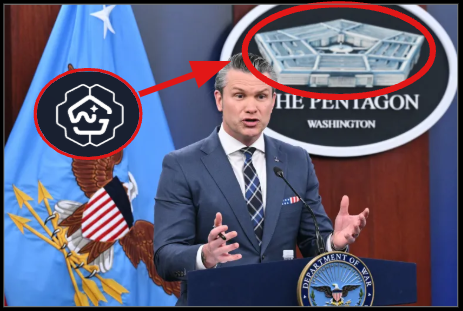
So, how does the College Board make its money? Primarily, through test and program fees (although they also make money through investments and selling student data to external organizations, like the Department of Defense). The SAT costs $68 dollars to take, with an extra $38 dollars for registering late, $34 dollars to change where you take the test, $34 dollars to cancel, and $44 to cancel late. If you want to actually use those scores, it’ll cost you $15 per report, and further costs still to have your score reports sent faster, verified, or sent to you after you’ve completed high school. AP testing fees start at $99 and escalate more quickly than the SAT fees from that point. Basically, the College Board is determined to nickel-and-dime (except in sizable dollar amounts) its students at every step, using its necessity to students to force them to pay hand over fist to take their tests. Even if someone struggles to afford these exorbitant testing fees, they cannot afford not to take the tests which are so important to their academic futures.
Another massive problem with the College Board’s tests is how they are made and scored. The SAT’s multiple-choice section has long been accused of biased construction, and these concerns are not unfounded. For instance, the College Board evaluates the validity of SAT questions by adding them to an unmarked “unscored section” of the SAT and evaluating how accurately they are answered by overall high scorers. If high scorers answer the questions right more often than lower scorers, the questions are potentially added to future SATs. Naturally, because high scorers determine the questions which decide which future students score highly, past and future high scorers tend to be demographically similar, and, with the SAT existing for nearly a century, this has led to the SAT unintentionally favoring wealthy, white, and male students. One 2015 analysis of this practice found that, although there were questions in the “unscored section” which black test-takers answered correctly more often than white test-takers, those questions were almost always scrapped because the high scorers which determined question validity were mostly white, because they had taken tests with questions determined by white high scorers, and so the tests remain biased.
Bias isn’t the only issue with the SAT specifically, though. The College Board has removed question types, such as Analogies, from the test after they proved not to be relevant to test-takers’ academic success, but it once removed an entire section from the test. The SAT Essay was introduced in 2005 over fears that the University of California system would make the SAT optional in its applications. Today, it has been in the process of being phased out for nearly a decade, first being made optional in 2016, then being restricted to specific states in 2021. It also received another major overhaul with its 2016 revision, as the original version of the section was… academically questionable. One MIT faculty member, Dr Les Perelman, argued that the essays were simply graded by length, instead of accuracy or quality of writing, and, to prove it, Perelman reviewed 54 sample essays provided by the College Board to determine the statistical relationship between essay length and score. His results were conclusive. Afterwards, in an interview with the New York Times, he said of his discovery that, “If you just graded them based on length without ever reading them, you’d be right over 90 percent of the time.” The previous version of the test only served to muddle overall analyses of student performance, and the 2016 version, by comparison, is innocuously redundant. It asks students to read a passage, explain how the author builds an argument, and use evidence to support this analysis. If you’ve taken the AP English Language and Composition test, you’ll realise that these requirements are exactly the same as those for the Rhetorical Analysis essay. Indeed, the two essays are basically identical, raising questions as to why it exists even in its present, limited form. The life of the SAT essay section is that of the College Board hastily creating and implementing an essay prompt to appease universities skeptical of the SAT’s validity, realizing how badly that hastily-created essay prompt damaged its credibility, and spending years trying to kill it as quietly as possible while using another test’s essay as a placeholder.
To say nothing of the College Board’s administration of their tests. In 2006, the College Board’s improper storage of testing sheets led to thousands of tests being improperly scored by up to 450 points. In 2013, widespread cheating and massive test leaks led to SATs being cancelled for the entire country of South Korea. American cheaters were emboldened when the US August 2018 SAT was found to be a reused international SAT from 2017. And, of course, the new digital AP tests have been fraught with technical disruptions, to the point where the 2025 AP Psychology exam had to be rescheduled for many schools, including Academic Magnet
The most damaging effect of the College Board’s consolidated control over education, though, is how it has motivated and empowered wealthy families to exploit competitive college admissions. In terms of legal means of gaining an advantage, testing, retesting, and sending scores all cost money, as outlined earlier, and professional tutoring certainly isn’t cheap either. Of course, fraud is often an expensive undertaking as well. Operation Varsity Blues, a federal investigation into fraud and bribery surrounding college admissions, was hugely revelatory of this. The ringleader of the scheme, William Rick Singer, made millions of dollars by selling wealthy parents the ability to use the College Board’s incompetence to subvert it. He had students fly across the country to registered testing centers he controlled, instructing parents to tell the College Board about a made-up family event. Before it was simplified in 2017, the College Board’s application process for disability accommodations was known for being more arduous than preparing for the tests themselves — except, of course, for parents equipped with falsified reports from bribed psychologists. While people who likely needed accommodations often could not get them, Singer’s customers often received large time extensions on tests they were already paying someone else to take for their child (College Board aside, the whole affair is disheartening, at least to me. Parents were instructed to go behind their children’s backs, lie to them about the nature of the help they were getting, and discourage them from preparing for or talking about classes and tests where Singer was helping their parents intervene). Singer, for his part, claimed that the practice was widespread: “all the wealthy families that figured out [sic] that if I get my kid tested and they get extended time, they can do better on the test… the playing field is not fair”. Even though the College Board has since shifted the work of determining accommodation eligibility to school coordinators, all this really does is change who gets bribed in these operations. While the College Board obviously isn’t entirely to blame for this corruption, it was accomplished because of the College Board’s systemic errors in judgement, within a testing system governed by the College Board, and expedited because the College Board’s size made exploiting these systems especially convenient and profitable. In an applications system dictated by a singular organization, missteps, structural issues, or lapses in oversight become massive windows of opportunity for dishonest profiteers who attract business because what they sell is often the only thing that can get students into the most prestigious colleges.
So, is there anything we can do? Probably not. Even though more universities are becoming test-optional, the SAT has only grown more popular. AP tests are growing in popularity, too, and may soon play a larger role in gatekeeping admissions. Despite all my venom, I cannot dictate the actions of the College Board, and am as subject to their whims and rules as any other American high schooler. There is, however, a group which the College Board does answer to, and that is the prestigious universities it sells access to. The test-optional movement was sparked when the University of California’s president publicly criticized the SAT. In response, the College Board lengthened and modified the test, but many schools stopped requiring it anyway. The College Board depends on being in good standing with the schools it gatekeeps for its legitimacy, and, by extension, the number of students and school systems which buy its products. How can we use the College Board’s dependence on these schools? I don’t know. All I know is that, somehow, the College Board must be stopped, lest it completely consume our education.
Sources:
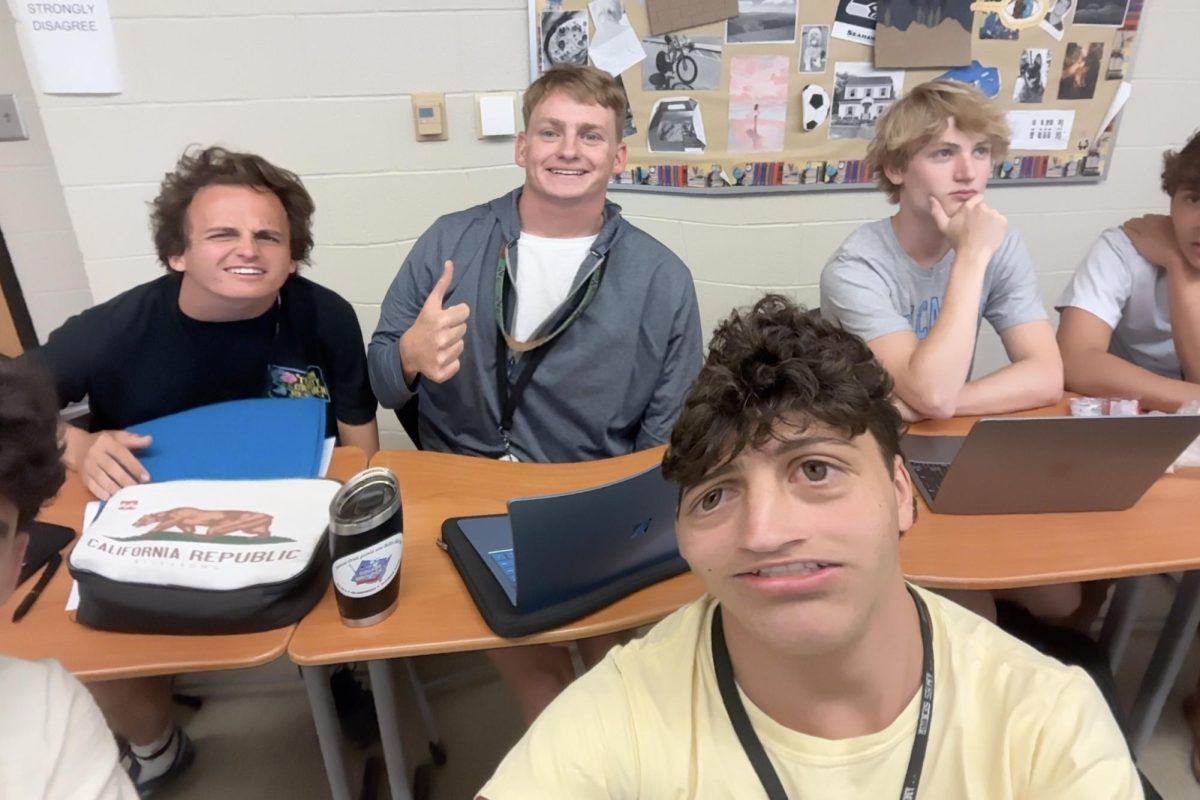
Photo inspired by a previous Talon article: https://amhsnewspaper.com/45744/opinions/i-hate-the-college-board/
The College Board website collegeboard.org
ProPublica for revenue, assets, and compensation https://projects.propublica.org/nonprofits/organizations/131623965
Dylan Tanouye writing for The Tufts Daily for other financial information and statistics https://www.tuftsdaily.com/article/2024/01/the-college-board-has-become-indistinguishable-from-a-hedge-fund
Jay Rosner referenced by Dr. Ibram X. Kendi writing for Diverse for SAT bias https://www.diverseeducation.com/opinion/article/15092463/new-mind-boggling-evidence-proves-sat-bias
Les Perelman as interviewed by Michael Winerip writing for the New York Times for SAT essay flaws
https://www.nytimes.com/2005/05/04/education/sat-essay-test-rewards-length-and-ignores-errors.html
Valerie Strauss writing for the Washington Post for SAT cancellations in South Korea https://www.washingtonpost.com/news/answer-sheet/wp/2014/10/30/an-account-of-exactly-how-students-cheated-on-sat-in-asia/
Ruben Vives writing for the LA Times for SAT reuse https://www.latimes.com/local/lanow/la-me-ln-sat-exam-leaked-20180827-story.html
Operation Varsity Blues information obtained from a transcript of phone conversations from the DoJ https://www.justice.gov/file/994186/dl?inline=














Jack Herzke • Oct 10, 2025 at 12:03 am
That was an incredibly well-explained analysis of College Board’s misdeeds and should absolutely be more popular than it appears to be.
Liam Rhorbacher • Oct 13, 2025 at 11:14 am
Thank you!