
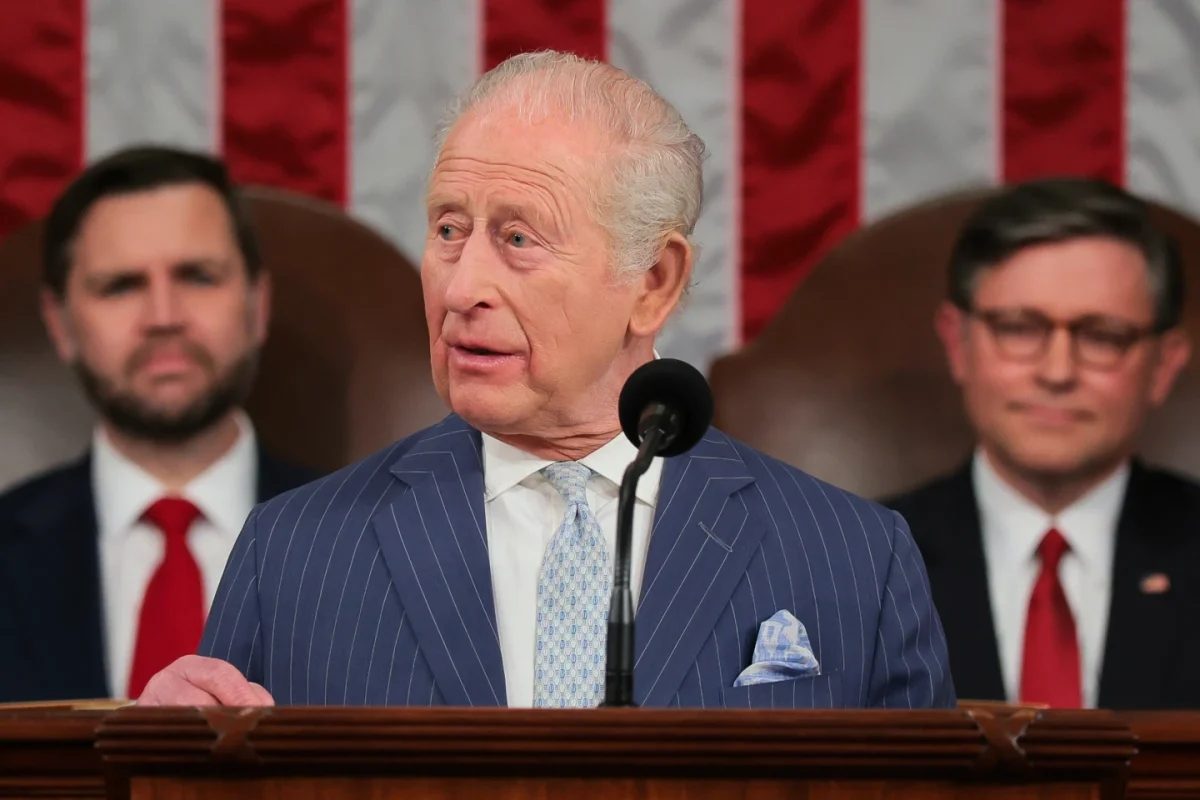
The arrival of a reigning king in the United States is, at first glance, largely ceremonial—an echo of an older world stepping briefly into a modern republic built on rejecting monarchy. Yet in the grand scheme of things, such a visit carries significance that stretches far beyond pageantry and polished speeches. It reflects enduring alliances, evolving diplomacy, and the symbolic power of tradition in a rapidly changing global order.
The United States was founded in defiance of a king, and that history remains central to its identity. For that reason alone, a monarch’s visit is layered with meaning. It serves as a reminder of how far both nations—and the broader international system—have come. What was once a relationship defined by revolution and conflict has transformed into one of the most stable and influential partnerships in the world. A king stepping onto American soil today does not represent authority over the nation, but rather mutual respect between sovereign equals.
In practical terms, such visits reinforce diplomatic ties. While presidents and prime ministers handle the mechanics of policy, monarchs often serve as apolitical ambassadors. Their presence can soften tensions, strengthen cultural bonds, and open doors for cooperation in areas like trade, climate policy, and security. In a time when political leadership frequently changes and domestic divisions run deep, the continuity of a monarchy can provide a steadying symbol of long-term partnership.
There is also a powerful cultural dimension. Royal visits tend to captivate public attention in ways that traditional diplomacy does not. Crowds gather, media coverage intensifies, and conversations extend beyond policy into shared history, values, and identity. For Americans, it can spark curiosity about global traditions and systems of governance different from their own. For the visiting nation, it is an opportunity to showcase heritage and reinforce its relevance on the world stage.
Critics may argue that monarchy itself is outdated, a relic with little place in a democratic age. That perspective is not without merit. However, the continued global interest in royal figures suggests that symbolism still holds weight. In international relations, perception often matters as much as policy. A king’s visit can signal stability, continuity, and unity—qualities that are increasingly valued in uncertain times.
On a broader scale, the visit highlights how diplomacy has evolved. Power is no longer defined solely by military strength or economic dominance. Soft power—the ability to influence through culture, values, and relationships—has become equally important. Monarchs, unburdened by electoral politics, are uniquely positioned to contribute to this form of influence.
Ultimately, the significance of a king’s arrival in the United States lies not in any single meeting or speech, but in what it represents: the endurance of alliances, the blending of old and new forms of leadership, and the ongoing effort to maintain cooperation in a complex world. It is a reminder that even in a nation founded on rejecting kings, there is still room to recognize the role they can play in shaping the future.