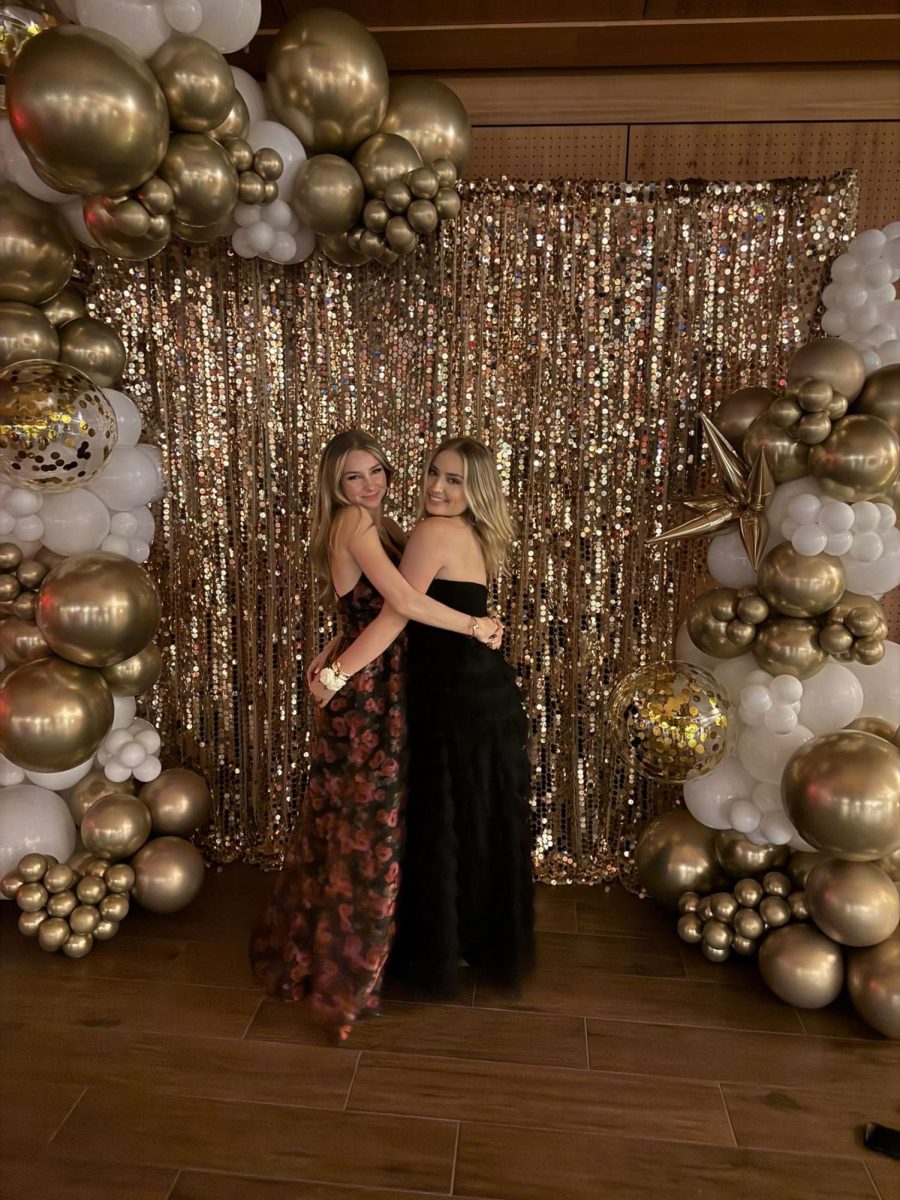

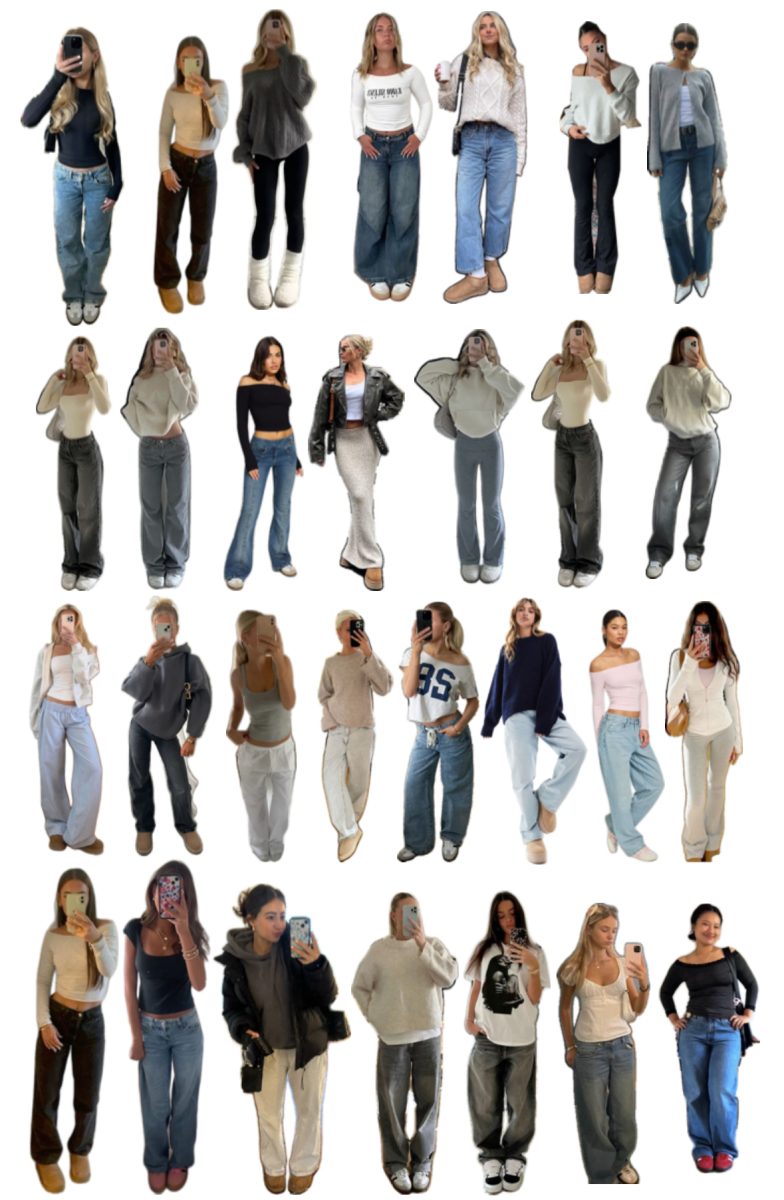
Fashion moves fast, but at Magnet, it often moves quietly. Between early mornings, heavy backpacks, and schedules packed with endless classwork, clubs, and sports, what students wear is rarely just about trends. It’s about efficiency, identity, and the subtle pressure to look put together without trying too hard. With 2026 approaching, a student survey reveals that Magnet’s fashion future may be less about dramatic change and more about honesty, about what students actually wear, why they wear it, and what they’re ready to leave behind.
When students were asked what fashion trends would be completely out by 2026, the answers ranged from hyper-specific aesthetics to broader cultural critiques. Some predictions targeted recognizable internet-driven looks. “The Kylie Jenner lip trend is not going to last in 2026,” said Jacob Cowan, pointing to the fading influence of celebrity-driven beauty standards that once dominated social media feeds. As trends accelerate faster than ever online, many students seem aware of how quickly these aesthetics rise and fall.
Others focused on the performative nature of fashion itself. One student predicted that “performative fashion” will disappear, referencing outfits curated less for personal comfort or self-expression and more for attention, validation, or algorithmic approval. This idea echoed across several responses, suggesting a growing fatigue with fashion as content rather than clothing as something lived in.
The clean girl aesthetic: a look defined by slicked-back hair, neutral colors, minimal makeup, and a carefully effortless appearance, was repeatedly cited as a trend students believe will fade. One respondent named “bubble skirts and leopard sequin micro-shorts” as styles on their way out, adding that the clean girl aesthetic will likely become less common. While acknowledging its appeal, “clean girl aesthetic is cute”, the same student predicted a shift toward maximalist fashion and a revival of the 2016 grunge aesthetic.
That desire for maximalism signals something deeper than trend preference. It reflects a craving for individuality in an environment where students often feel boxed into sameness. Grunge, layering, and experimental styling offer room for imperfection, creativity, and emotional expression: things that feel increasingly rare in a hyper-curated digital culture.
Still, not all students believe Magnet fashion is on the brink of transformation. In fact, some respondents were strikingly realistic, even cynical, about how much will actually change. When asked to finish the sentence “In 2026, everyone at Magnet will be wearing…,” several students responded with variations of the same idea: nothing new.
“Mostly the same stuff,” wrote senior Emme Williamson. Another student echoed the sentiment more bluntly: “The same stuff, honestly.” These responses suggest that despite shifting trends online, everyday student fashion may remain largely unchanged, rooted in practicality, comfort, and routine.
Williamson expanded on this perspective in a longer response that challenged not just trends, but the fashion system itself. “Most people wear generic, unsustainable fast fashion because it’s convenient,” they wrote. “It says nothing and gives no impression, and I’m not sure that will ever change.” They went on to critique both fast fashion and the romanticization of vintage clothing, noting that while some older garments use different construction techniques, that does not automatically make them better or longer-lasting.
This realism cuts through much of the optimism surrounding sustainability and ethical fashion. Although students often express support for thrifting and conscious consumption, the survey results show that convenience still dominates daily decision-making. Fast fashion remains accessible, affordable, and easy: qualities that matter in a student environment where time and energy are limited.
That contradiction appears clearly in survey data about sustainability. While some respondents believe sustainability will matter more by 2026, many answered that it will stay “about the same” or “not really” increase in importance. The data reflects a gap between values and behavior: students may care about sustainability in theory, but systemic barriers, such as cost, time, and availability, continue to shape what ends up in their closets.
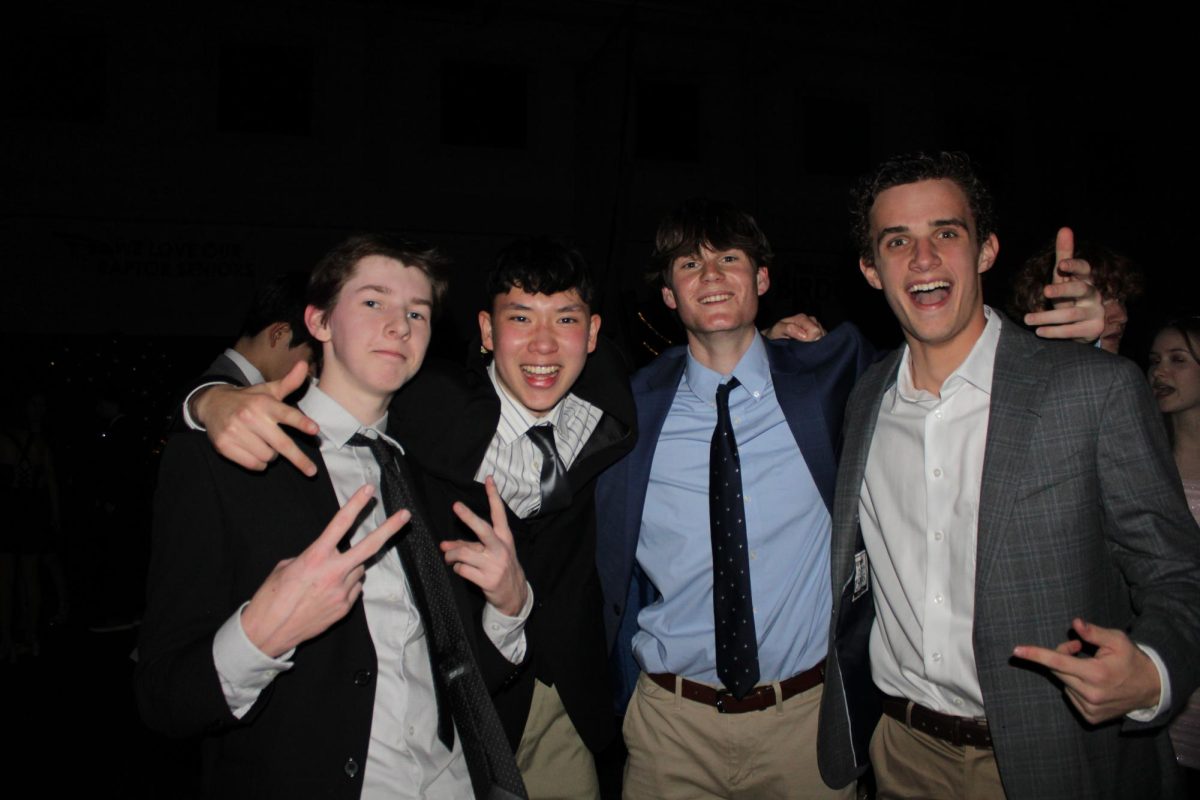
Despite skepticism, some students offered more concrete predictions about what Magnet hallways might look like in 2026. Cowan envisioned “pastel-colored polos paired with black leggings, denim jeans, or khaki pants,” a look that blends comfort with polish and mirrors Magnet’s current semi-uniform aesthetic. The prediction feels plausible in a school culture that values neatness and academic seriousness, even as students search for ways to personalize their outfits.
Others looked backward rather than forward. One student predicted that fashion would lean closer to “styles from the early 2000s (Y2K) than 2025,” reinforcing the cyclical nature of trends. Another added that “Kanye’s old fashion style will come back,” referencing oversized silhouettes, muted color palettes, and utilitarian layering that once defined his influence. These throwback predictions suggest that while students may resist constant novelty, they remain drawn to eras that feel expressive and culturally distinct.
Footwear, in particular, emerged as a site of change. One student predicted that “shoes like Jordans and Yeezys will go completely out of style (for the time being),” replaced by “nicer, classier shoes like loafers and Birkenstocks that are less brand-flashy and more neutral.” This shift reflects a broader movement away from hype-driven branding toward understated, functional pieces, like shoes chosen for longevity rather than status.
Taken together, these responses paint a nuanced picture of Magnet fashion in 2026. Students are not chasing trends blindly, nor are they rejecting fashion entirely. Instead, they are navigating a space shaped by academic pressure, digital culture, and limited resources. Clothing becomes a compromise between self-expression and efficiency, between ethics and convenience, between standing out and fitting in.
Ultimately, Magnet’s fashion future may not be defined by one dominant trend, but by a collective honesty about what students need from their clothes. Whether that means polished polos, thrifted layers, or the same hoodies worn year after year, student style will continue to reflect lived experience more than online aesthetics.
Fashion may change, circle back, or quietly fade, but at Magnet, what students wear will always tell a story about time, pressure, and identity. And in 2026, that story seems less about what’s “in” and more about what works.